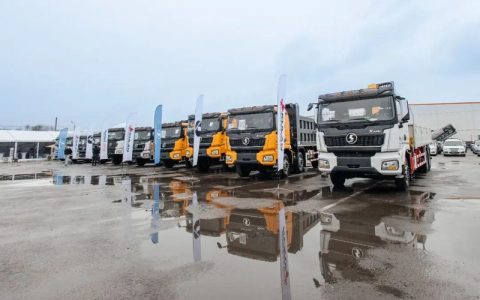
In North Africa, a major local infrastructure contractor is undertaking several of the country's flagship national projects, including the local international airport project, a large port development project, and a residential development project.
Airport construction is typically earthmoving-intensive. Site grading and pavement backfilling call for continuous bulk earth transport, while the structural layers of runways, taxiways and aprons require large volumes of crushed stone; utility trenches and the foundations for aeronautical ground lighting below the pavement equally depend on backfill and material delivery. All of this has to be completed before a paved surface exists, on a site served mainly by temporary unpaved earth roads, where high local temperatures, heavy dust and a tight construction schedule leave little room for slippage.
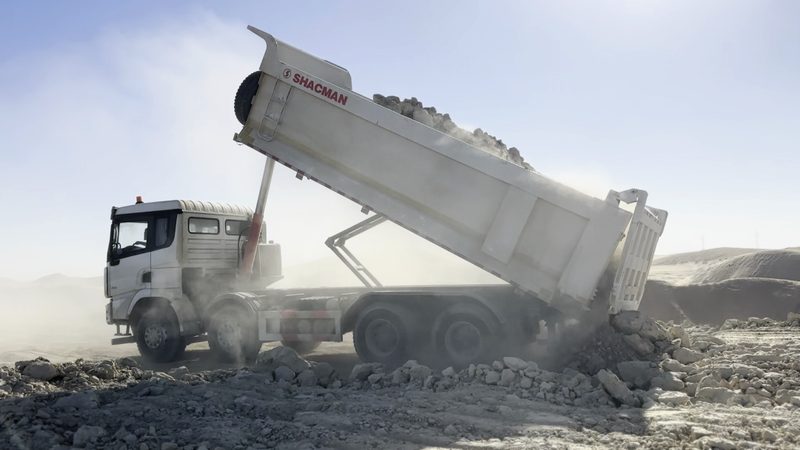
SHACMAN is hauling crushed stone
The company has purchased 70 SHACMAN X3000 and H3000 dump trucks to date, used mainly for bulk earth and rock haulage, moving construction materials, and laying asphalt. The operating conditions are severe: summer temperatures of 35–40°C, a gross vehicle weight above 50 tons per truck, cargo mainly crushed stone and earth, running surfaces of loess and site haul roads, heavy dust, and continuous high-duty operation. Every day a truck stands idle is a day of delay on the airfield works, so reliable availability is this fleet’s overriding concern.
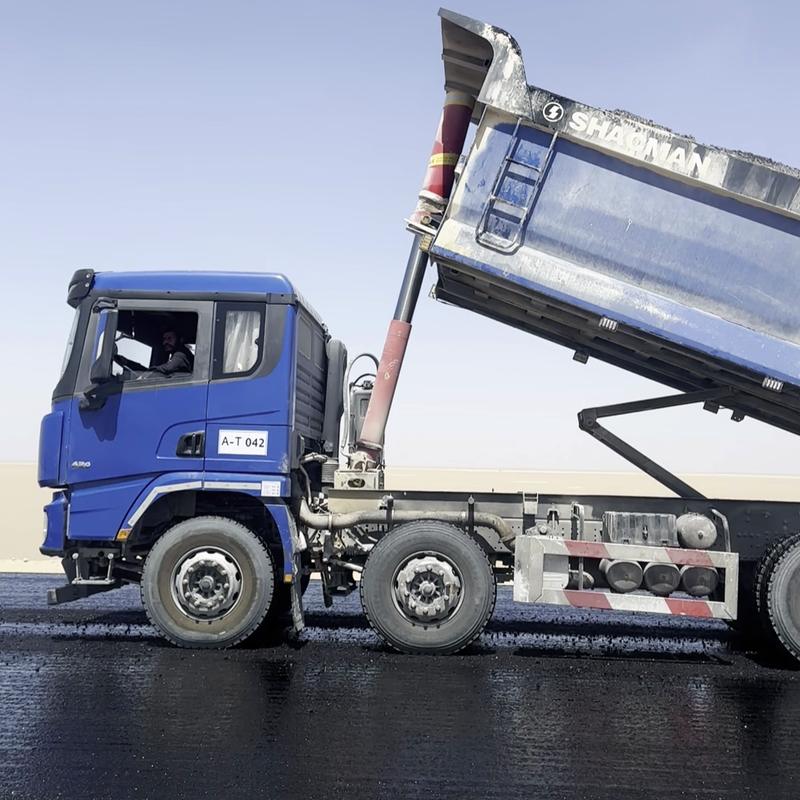
SHACMAN is paving asphalt roads
More critical than the operating conditions is the cost of purchase. When a major local infrastructure project ends, part of the heavy vehicles on site has to be disposed of under local policy, and airport projects of this kind typically run for three to five years, so the capital committed to vehicles has to sit against the whole cycle. European heavy trucks are expensive to buy, and their residual value under policy-driven disposal is uncertain, making the investment riskier. At the same time, because fuel is cheap locally, differences in fuel consumption translate into limited cost differences, so what really lands on the operating account is breakdown downtime and repair. To match the dusty, high-temperature conditions of the airfield site, SHACMAN optimized the vehicle configuration: an oil-bath air cleaner to strengthen intake filtration in dusty environments, a reinforced chassis structure for greater heavy-load carrying capacity, and a locally well-recognized Cummins engine to ensure market suitability. After weighing all the options, the company ultimately adopted the SHACMAN solution.
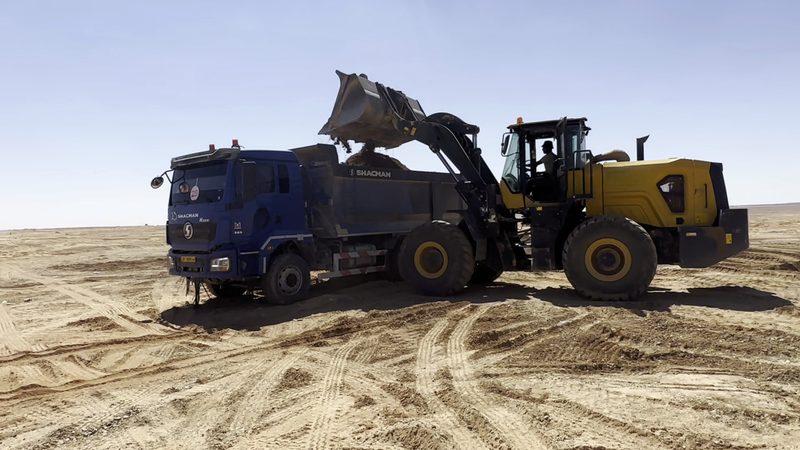
SHACMAN is hauling earth at the job site
Since going into service, the vehicles have run reliably. At gross vehicle weights above 50 tons, the X3000 dump truck’s fuel consumption is 38–42 liters per 100 km, an overall saving of roughly 3–4% against the European heavy trucks previously operated; annual maintenance cost is expected to be about 4% lower than on those trucks; no major quality issues have occurred during construction and the failure rate is very low; tire life now essentially covers the project cycle, further reducing consumable costs.
Service support is equally central to the customer's decision to buy. SHACMAN has established a comprehensive service system across the region: service engineers are stationed at the project site and available for on-site support at any time; large parts warehouses are set up in both the eastern and western parts of the region, with fast-moving parts held in stock and coverage extending across the whole territory; and the company proactively provides vehicle operation and maintenance training for customers. For the contractor, this means a vehicle that develops a fault can be repaired quickly, reducing the downtime lost to waiting.
With stable product performance and a complete service system in place, the company has rated SHACMAN’s performance on the airport project very highly and has expressed its intention to order again. On its subsequent infrastructure projects, SHACMAN will remain the preferred brand.
An airport runway, from groundbreaking to opening to air traffic, often spans several years, and what really determines whether it opens on schedule is the trucks working day after day on the loess roads. For SHACMAN, what the customer buys is 70 trucks; what has to be delivered is the ability to operate reliably across a complete project cycle — choosing SHACMAN is choosing that peace of mind.